Riksbyggen · Consumer Platform
Automating Subscription Sales for 900 Tenant Organisations
900 tenant organisations had been testing Riksbyggen's digital boardroom for free. When the trial ended, re-registering them as paying customers through the existing manual process wasn't going to scale. I designed the automated signup platform that converted them — hitting the six-month target in under two months.
Client
Riksbyggen
Year
2021
Role
UX/UI Designer · Workshop Facilitator
Tools
Figma · Jira
Team
Developers · IT architects · Project manager
Insight
900 organisations needed to re-register. The manual process — administrators handling each one individually — would collapse under the volume. The real constraint wasn't signup UX. It was three systems that needed to communicate and currently didn't.
Action
Defined a very slim MVP through card sorting, cut everything that wasn't strictly necessary for the first release, and designed a simple flow on top of integrated billing, CRM, and client systems.
Impact
500 paying subscribers in under two months. The target was 500 by end of year. No customer support issues at launch.
The Problem
The free trial was ending. 900 organisations needed to re-register as paying customers. Riksbyggen's administrators couldn't process that volume manually.
Background
One of Sweden's largest housing companies, a digital product with 900 free trial users, and a deadline to convert them
Riksbyggen manages over 200,000 homes across Sweden, with 60+ offices and 2,500 employees. Their digital boardroom app — used by tenant organisations to handle board meetings and housing decisions — had been trialled free by 900 organisations. When the trial ended, those organisations needed to re-register as paying customers.
The existing process was entirely manual: Riksbyggen administrators processing each signup individually. With 900 organisations in the queue and a hard deadline, that wasn't going to work.
The short-term goal was to automate signup for the boardroom app. The longer-term vision was a platform that could package and sell multiple subscription-based services through the same interface.
My Role
UX and UI designer on a cross-functional team, working within an existing design system
I worked with front and back-end developers, IT architects, and a project manager. I ran the user research workshops, defined the MVP, designed the flow end-to-end, and facilitated the card sorting session that shaped the release scope.
Riksbyggen had a defined graphic profile and an extensive component library. The visual design was largely predetermined — the design problem was flow, information architecture, and how to make three systems communicate reliably in real time.
Discovery
Workshop to map users and goals, journey map to find where the system needed to be
I ran a brainstorming workshop with the project manager, a systems administrator, the product owner, and a few others from Riksbyggen. The goal was to define who the users were, what they needed to accomplish, and what the system had to do at each step.
The board member — a tenant organisation representative doing the actual signup. The systems administrator at Riksbyggen — managing the back-end and handling exceptions. The sales representative — secondary, supporting the process but not driving it.
Mapped every touchpoint from the moment a user decided to subscribe through to active access. This showed where the three systems — billing, CRM, client portal — needed to exchange data, and where failure would strand users.
Every user goal identified in the workshop went into a spreadsheet, categorised by which release it had to ship in. This became the document we used to scope the MVP and keep later releases separate.
Baseline going in
Every signup arrived manually. No automation, no self-service path. Administrators processed each one individually. With 900 organisations in the pipeline, the system needed to work without a human in the loop for clean, standard signups.
The Hard Part
Three systems that didn't talk to each other, a tight deadline, and 900 organisations that needed to move
The integration complexity
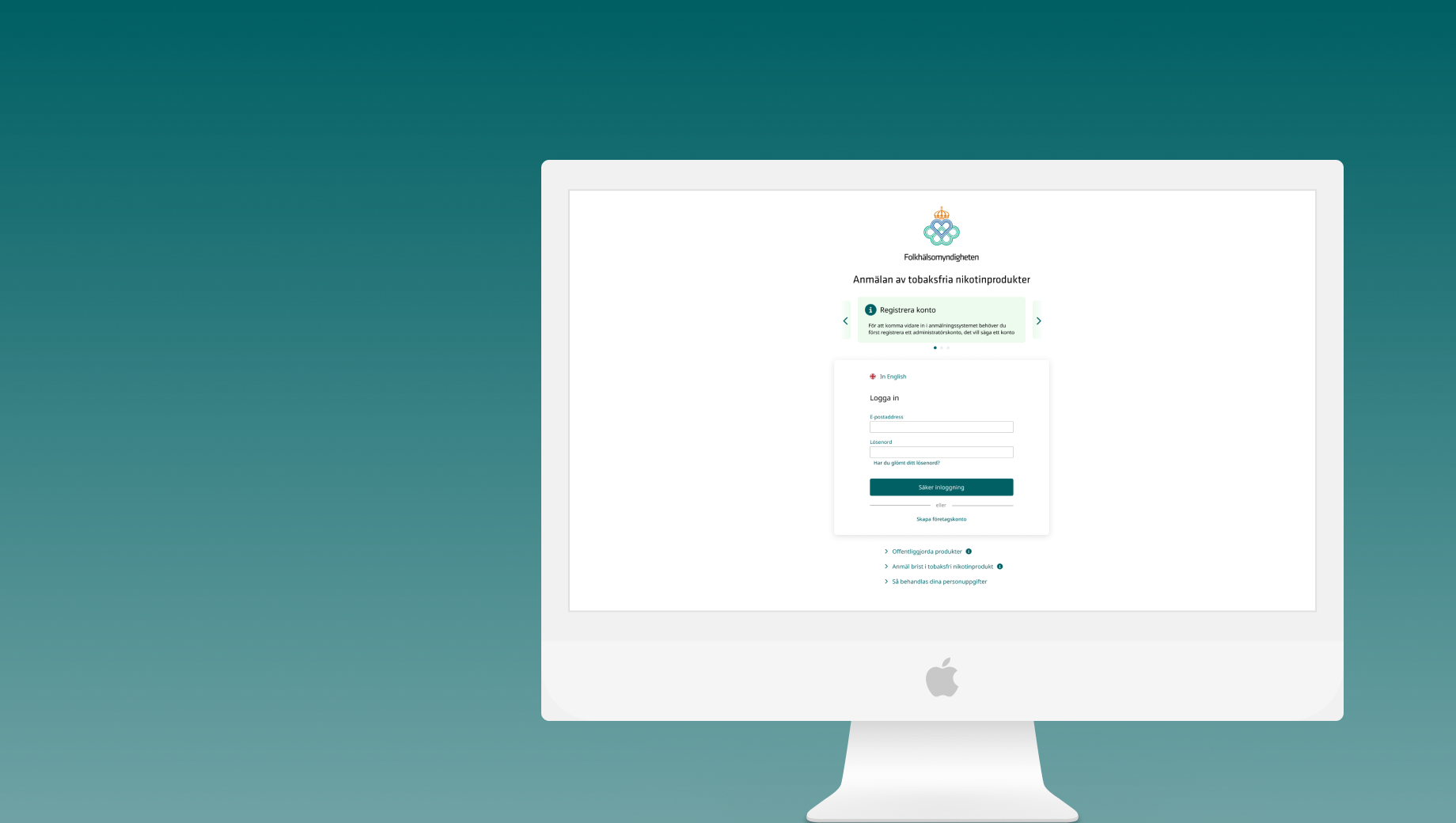
For signup to be fully automated, three systems had to exchange data in real time: Riksbyggen's internal billing system, their CRM, and the client-facing web platform with the subscription micro-frontend. None were designed to talk to each other. This was the hardest constraint — and it shaped every design decision.
Very tight schedule
The free trial was ending. 900 organisations were waiting to re-register. The deadline wasn't flexible — it was tied to Riksbyggen's commercial timeline. We had to ship something functional, not something perfect.
Defining the minimum without cutting too much
The hardest scoping decision was what not to build. The goal was a working signup, not a complete subscription management platform. Features that seemed necessary often weren't — the MVP workshop forced honest prioritisation.
Legal and identity constraints
We needed to know if a board member had the authority to act on behalf of their organisation. After checking with legal, we confirmed that accepting the T&Cs was sufficient — no separate identity verification needed. That removed a significant amount of complexity from the flow.
How Might We
Automate a signup process that requires billing, CRM, and a client portal to communicate in real time — without building more than the deadline allowed?
Design
A slim MVP built on card sorting, a clean signup flow, and a release plan for everything that didn't make the cut
Before designing anything, I ran a card sorting workshop with the systems administrator, the developers, and the product owners. We sorted user goals into three release buckets — what had to be in the first release, what could wait, and what wasn't needed at all yet.
Cut everything around cancellation flows — users had actively chosen the product, so churn wasn't the immediate concern. Cut separate identity verification — legal confirmed T&Cs covered it. What remained was the core: subscribe, confirm, get access.
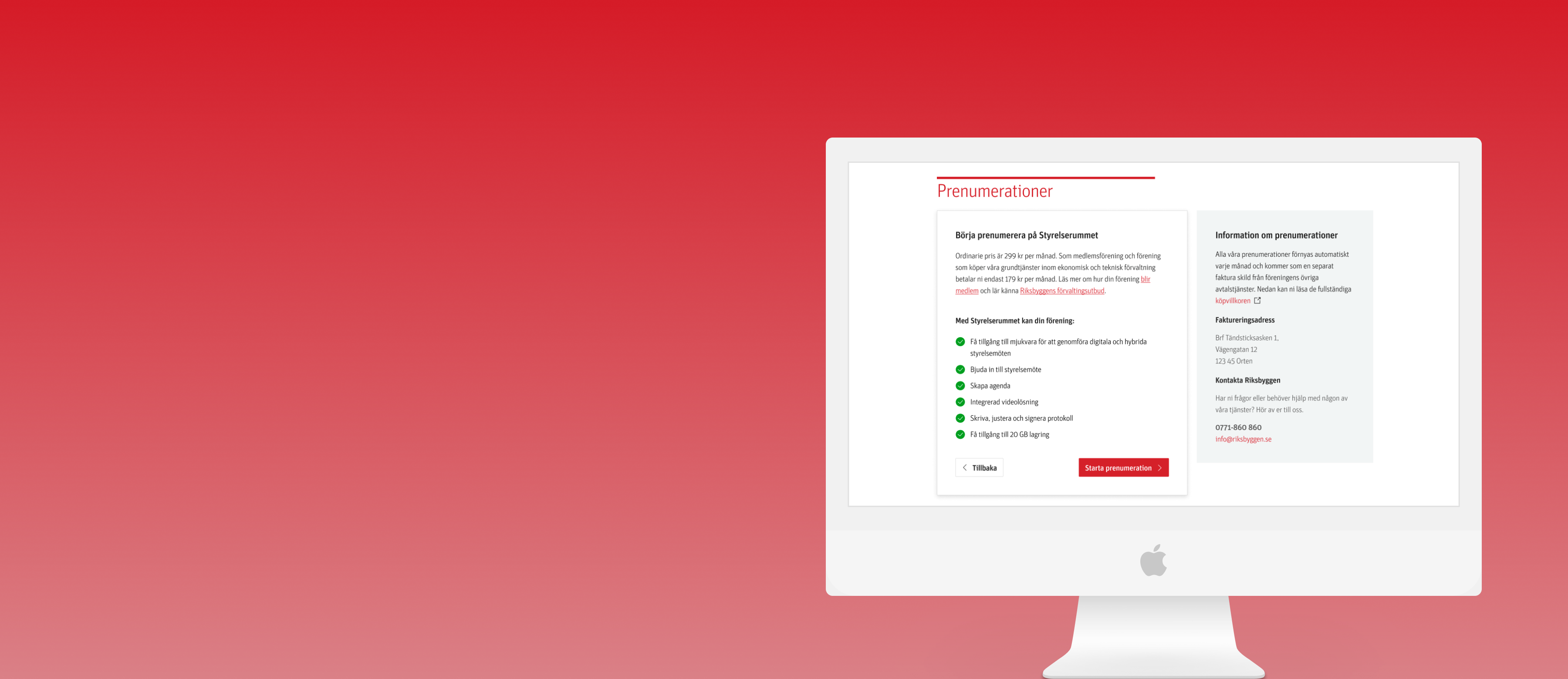
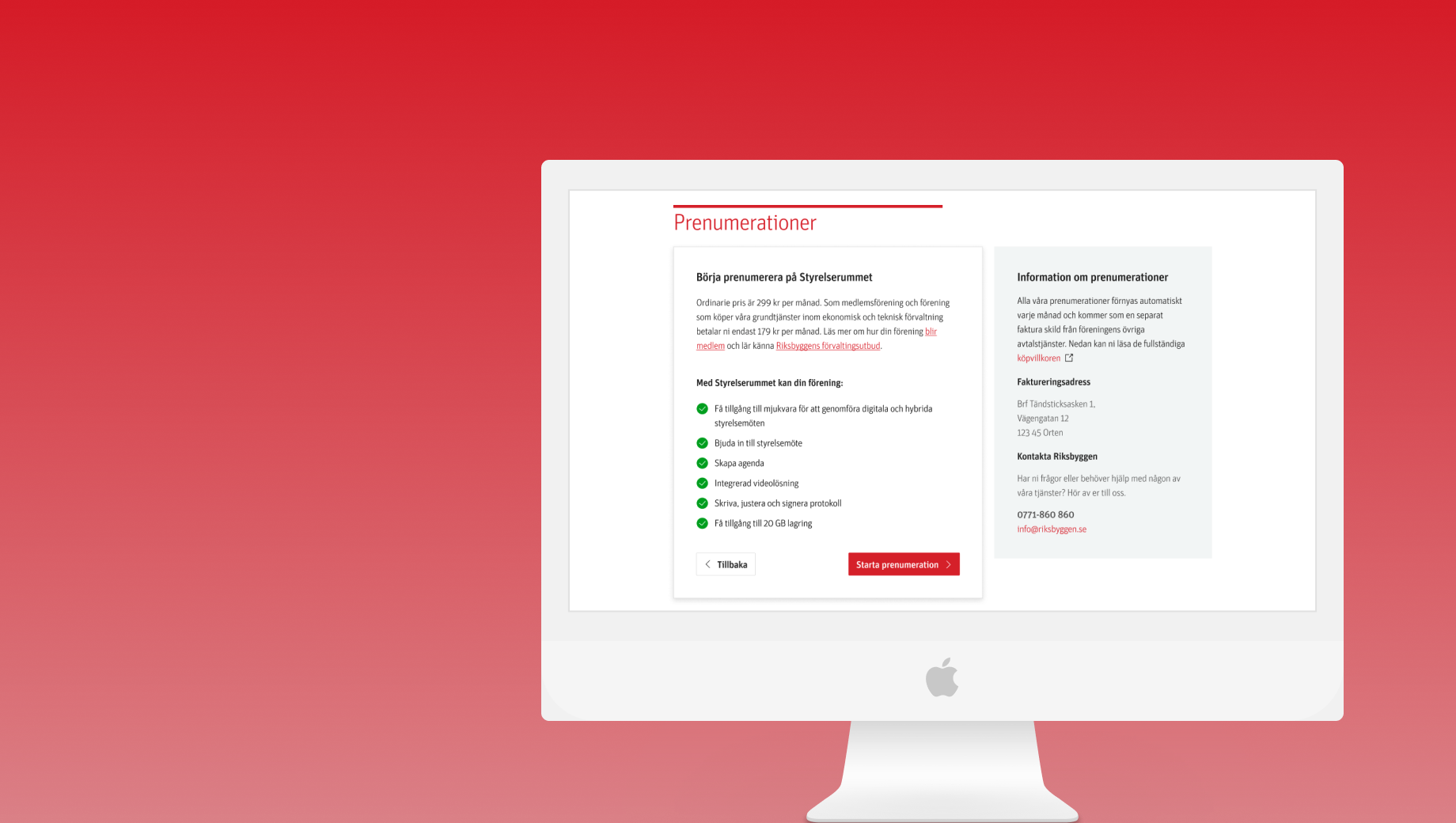
A simple, condensed interface: the user sees their active subscriptions and the services available to add. One service at launch — the digital boardroom app. The flow was designed to be completable without any guidance or support contact.
Designed from the web version down. Riksbyggen's existing component library handled the aesthetic — the design work was layout, hierarchy, and making the flow work across screen sizes without rebuilding it from scratch.
Everything cut from the MVP went into a documented release plan. The platform was designed to eventually support multiple subscription-based services — the first release just proved the model worked.
Testing & Iterations
Internal walkthroughs with the project team — the tight schedule didn't allow for external testing before launch
Testing was internal — walkthroughs with the project team and systems administrator before handoff. The schedule didn't allow for external user testing with actual tenant organisation representatives before the launch.
The real validation came from the launch itself. The signup rate was high, and there were no customer support issues — which for a flow with no support path built into the MVP was the outcome that mattered most. The absence of support tickets was the signal that the flow worked without assistance.
Results
500 subscribers in under two months — six months ahead of the target
What I'd do differently
Run a technical feasibility check on the system integrations earlier. The deadline was eventually pushed because of compatibility issues that surfaced mid-build. A focused technical discovery session at the start — with the IT architects mapping integration assumptions before design began — would have surfaced those blockers while there was still time to redesign around them.
Test with at least one real tenant organisation representative. The schedule was genuinely tight, but even a single walkthrough with someone from an organisation that had been on the free trial would have caught any gaps in the flow before launch. The zero support tickets suggest we got it right — but that was luck as much as process.
Help me improve this case study
Takes about 30 seconds — I read every response.
Are you here as a...
Was this case study relevant to what you were looking for?
What's missing or unclear? (optional)